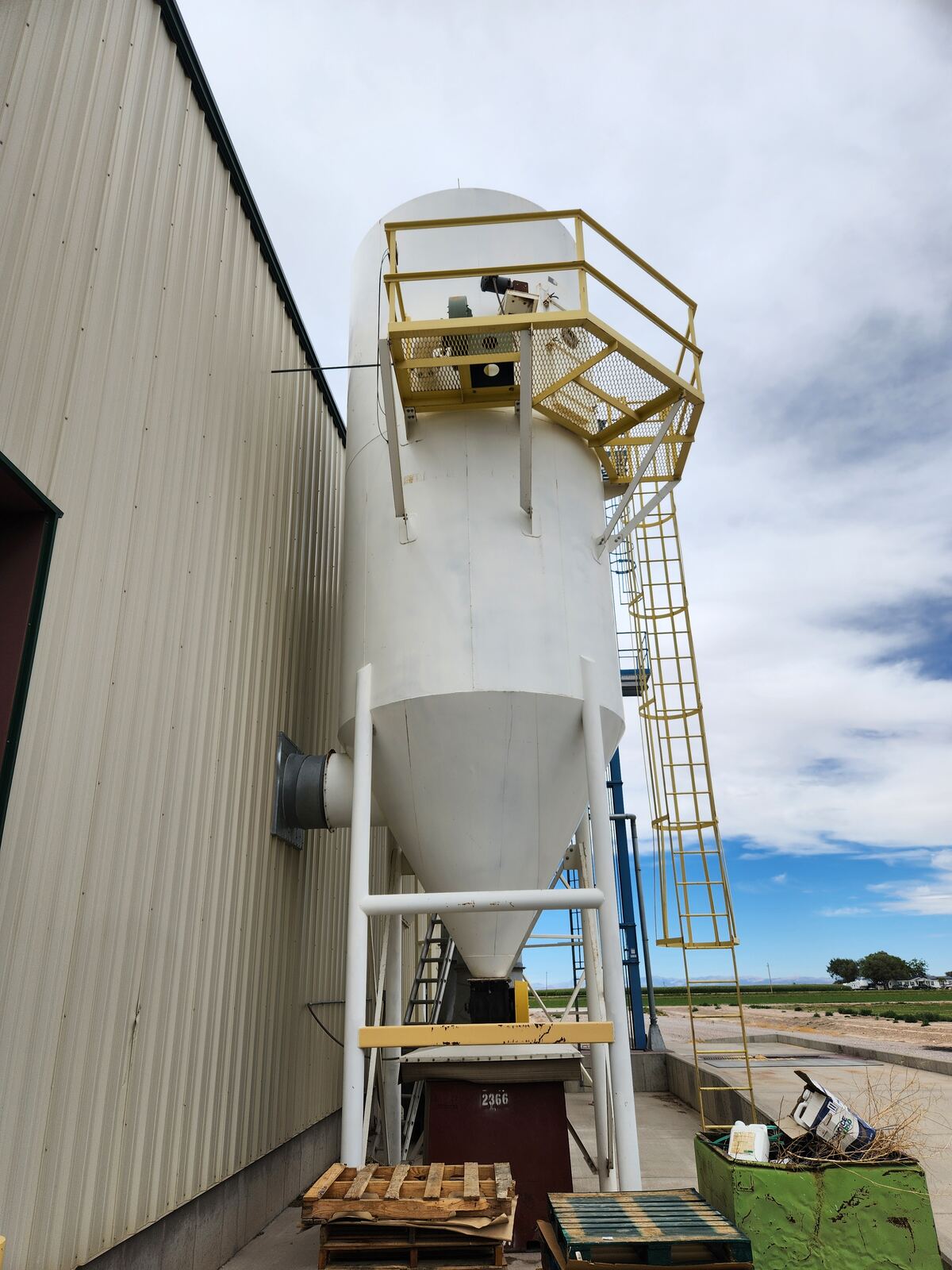
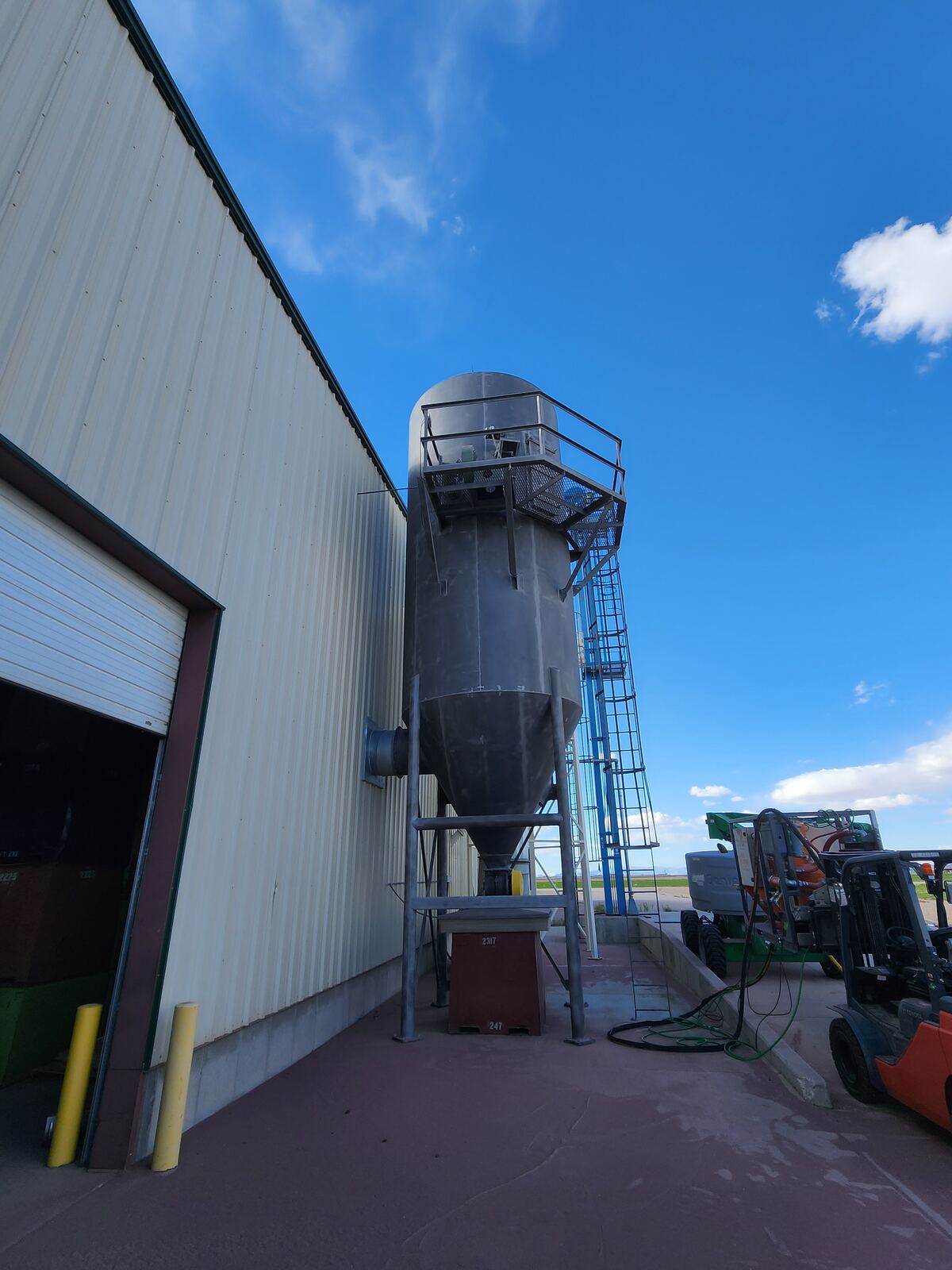
Not every project starts with something broken — the best ones start before that. This big cyclone dust collector tank at a Northern Utah facility was still doing its job, but its coating was chalked, worn, and starting to let rust take hold. The owners make the smart decision to recoat it now, on their schedule, instead of replacing it later on the rust’s schedule…

Why Recoat a Dust Collector?
On something like this, paint is not just cosmetic — it’s a systemic protector. Once the coating fails, bare steel rusts, rust turns into pitting, pitting eats through the shell and turns into leaks, and every leak bleeds off vacuum until the system loses suction and the equipment it serves starts choking on its own dust. By the time a collector shows those symptoms, you are patching holes or pricing a replacement. Catching it at the “rust is starting” stage is a maintenance job, catching it later becomes a capital expense.
Blasted to Bare Steel — On-Site
There is no practical way to haul a tank this size to a shop, so we brought the shop to it. Working with our mobile blasting rig, we stripped the entire vessel — shell, cone, legs, ladder, cage, and the top platform — down to clean bare steel. Blasting does two jobs at once here: it removes every trace of the old failing coating and surface rust, and it leaves a uniform anchor profile that the new coating can lock into for maximum adhesion.

Sealed Up and Back to Work
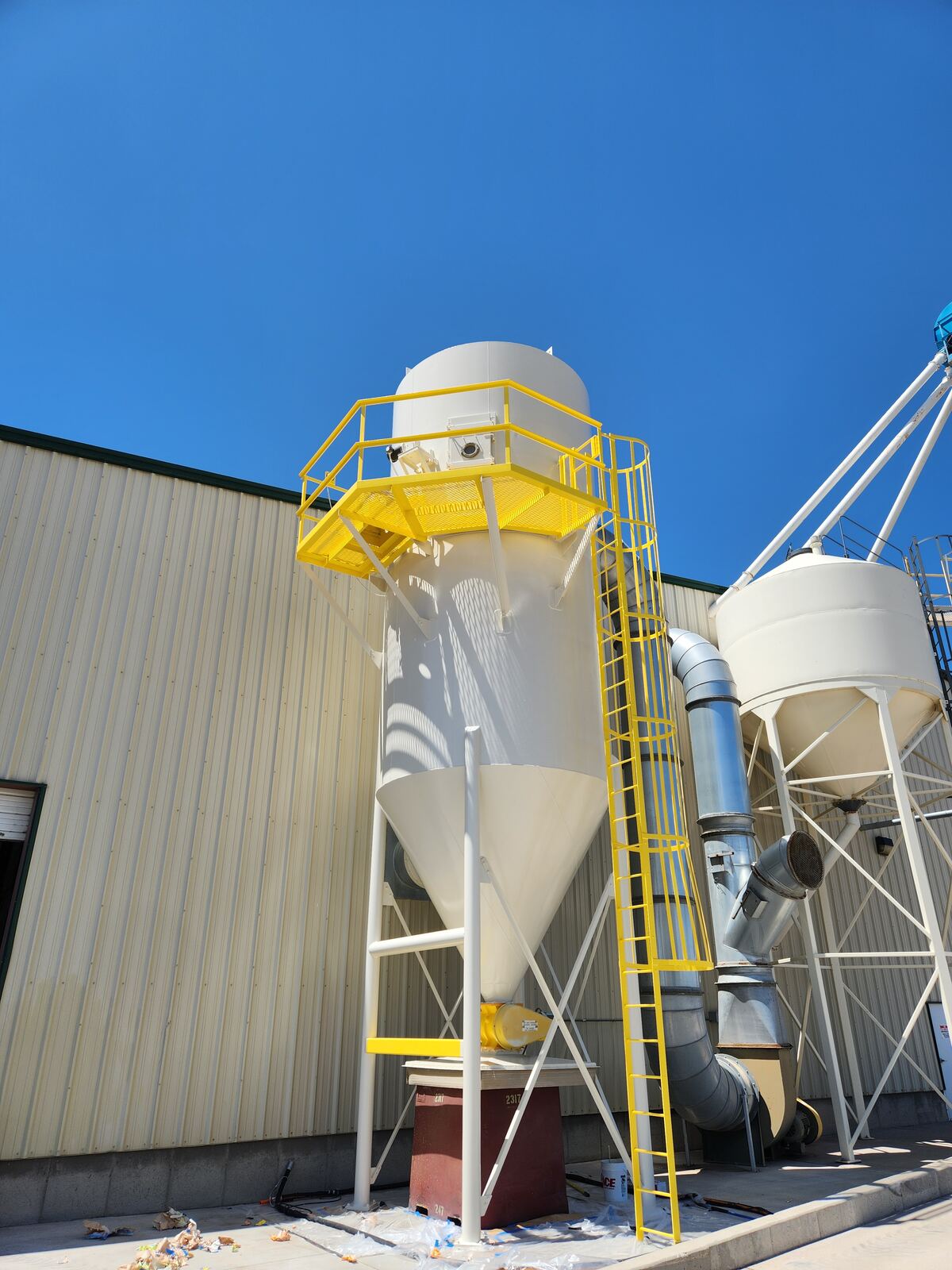
With the steel prepped, the tank got a fresh industrial coating system: bright white on the vessel and structure, with the ladder, cage, and platform finished in safety yellow so the whole unit meets the eye the way it should — clean, protected, and clearly marked. The facility never had to move the tank or lift a finger, the collector was protected in place.