These shipping containers stored tools on the jobsite, with custom shelves and fittings inside. The steel was sound, but the paint was faded, chalked, and damaged in places. Replacing the containers would have meant rebuilding the insides too. Better to fix the coating.
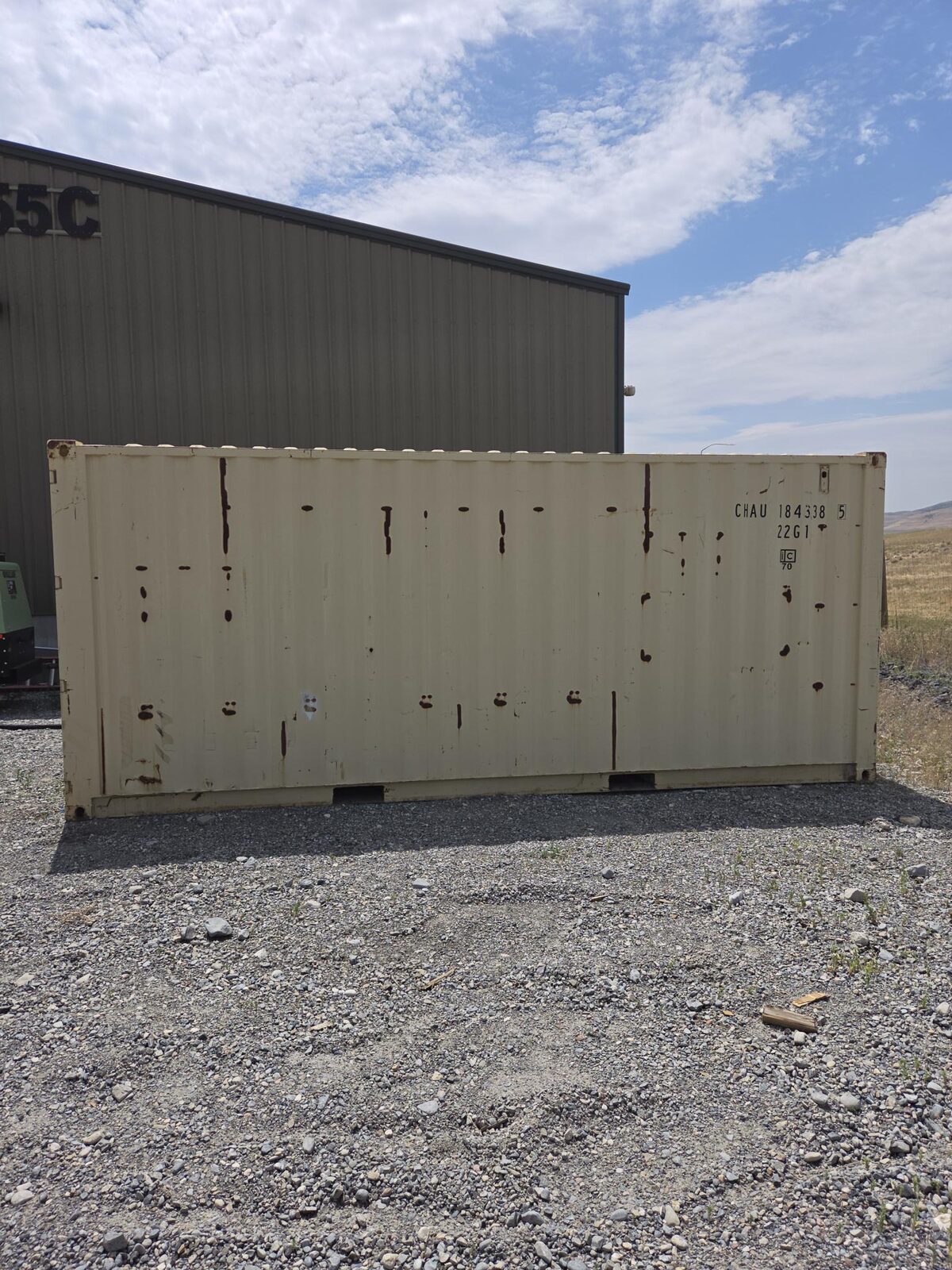
Before: Faded, Chalked, and Starting to Streak
Shipping containers live outside by definition, and Utah sun and weather are hard on factory paint. By the time this one came to us, the finish had oxidized to a dull chalk, and rust was bleeding through in streaks wherever the coating had been scraped and dinged by years of jobsite duty.
Blasted Clean, Then Sealed in Epoxy Primer
We blasted away the failing paint and surface rust, leaving clean steel with a profile for the primer to grip. Then we applied an industrial epoxy primer chosen for abrasion resistance. A tool-storage container gets banged and scraped on the jobsite.
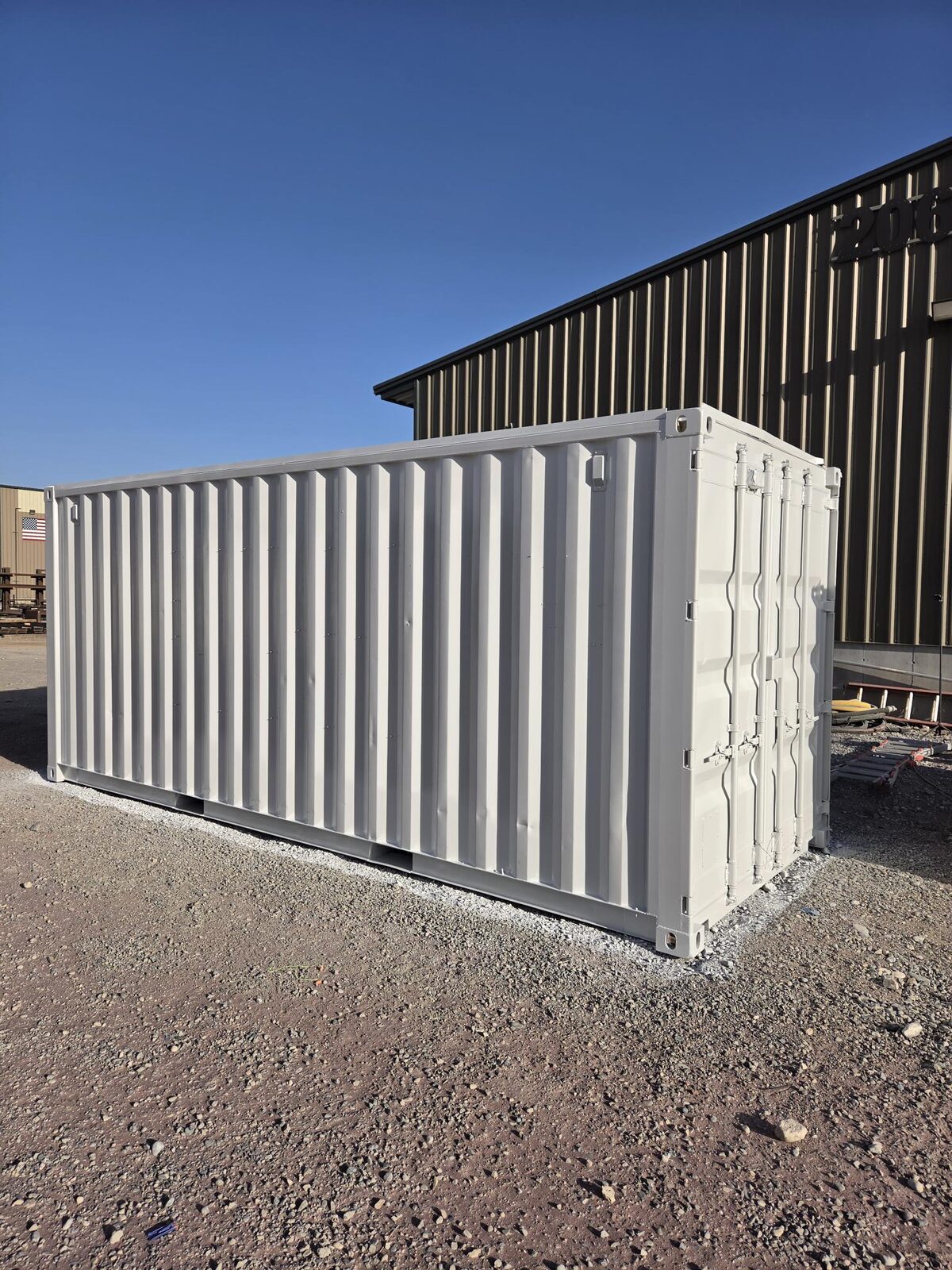
Topcoated in High-Solids Polyurethane
We sprayed a high-solids polyurethane topcoat over the epoxy primer. It resists UV fading and chalking, which had been the problem with the old paint. The container went back to work with a new two-coat finish.
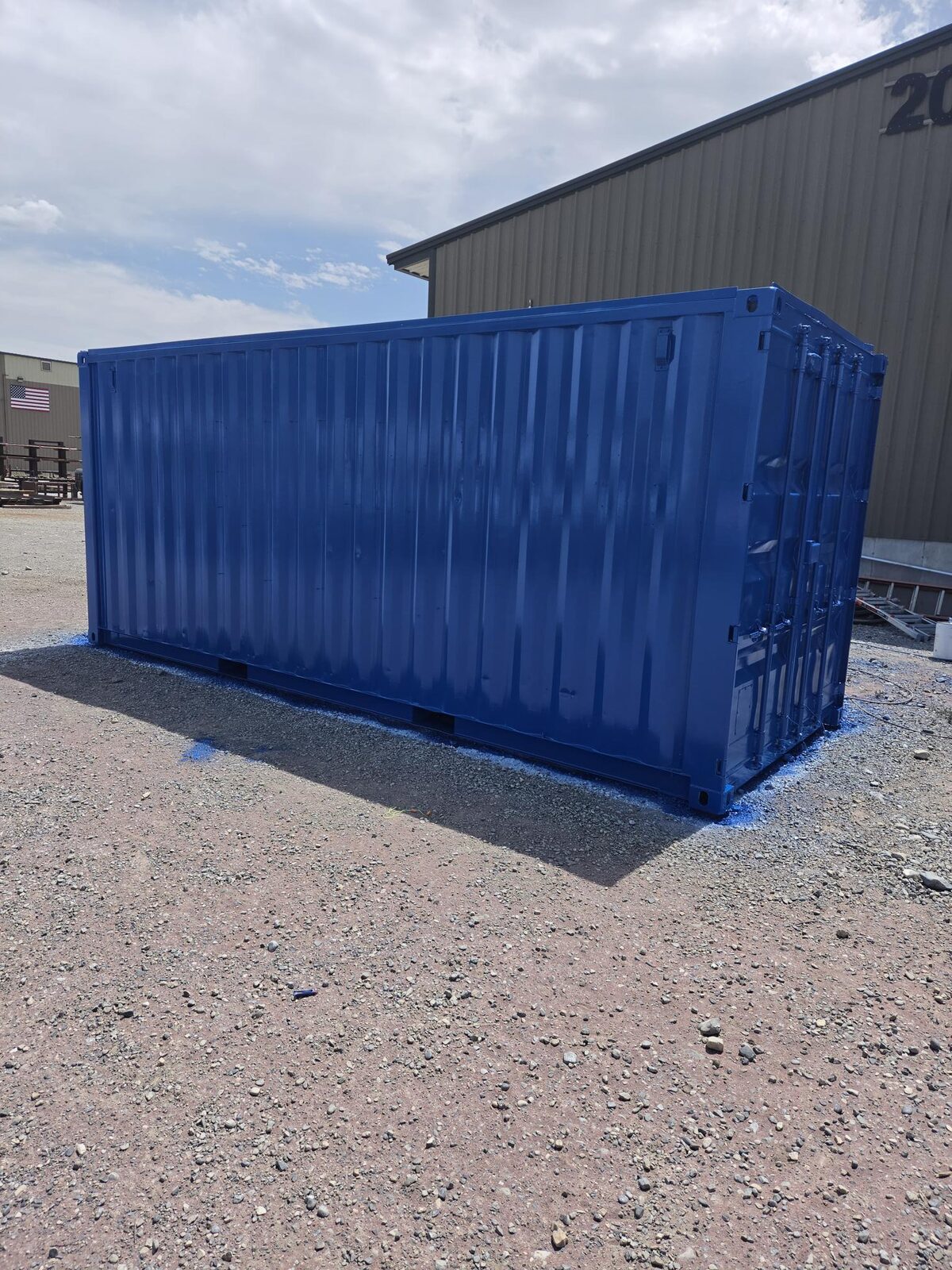
The custom build-outs stayed exactly as the crew set them up — and the container went straight back to work.